
Your Medical Record Is Probably Wrong
Research shows the average medical record contains 3-5 significant errors. These mistakes follow you to every new provider, insurance company, and disability claim.
5-7 day turnaround • HIPAA compliant • No medical advice given
See Exactly What You Get
This ChartCheck Standard Review uncovered 18 errors across 5 visits, including a 4-year delay in diagnosing lupus. See how documentation patterns prevented proper diagnosis and what correction language we provided.
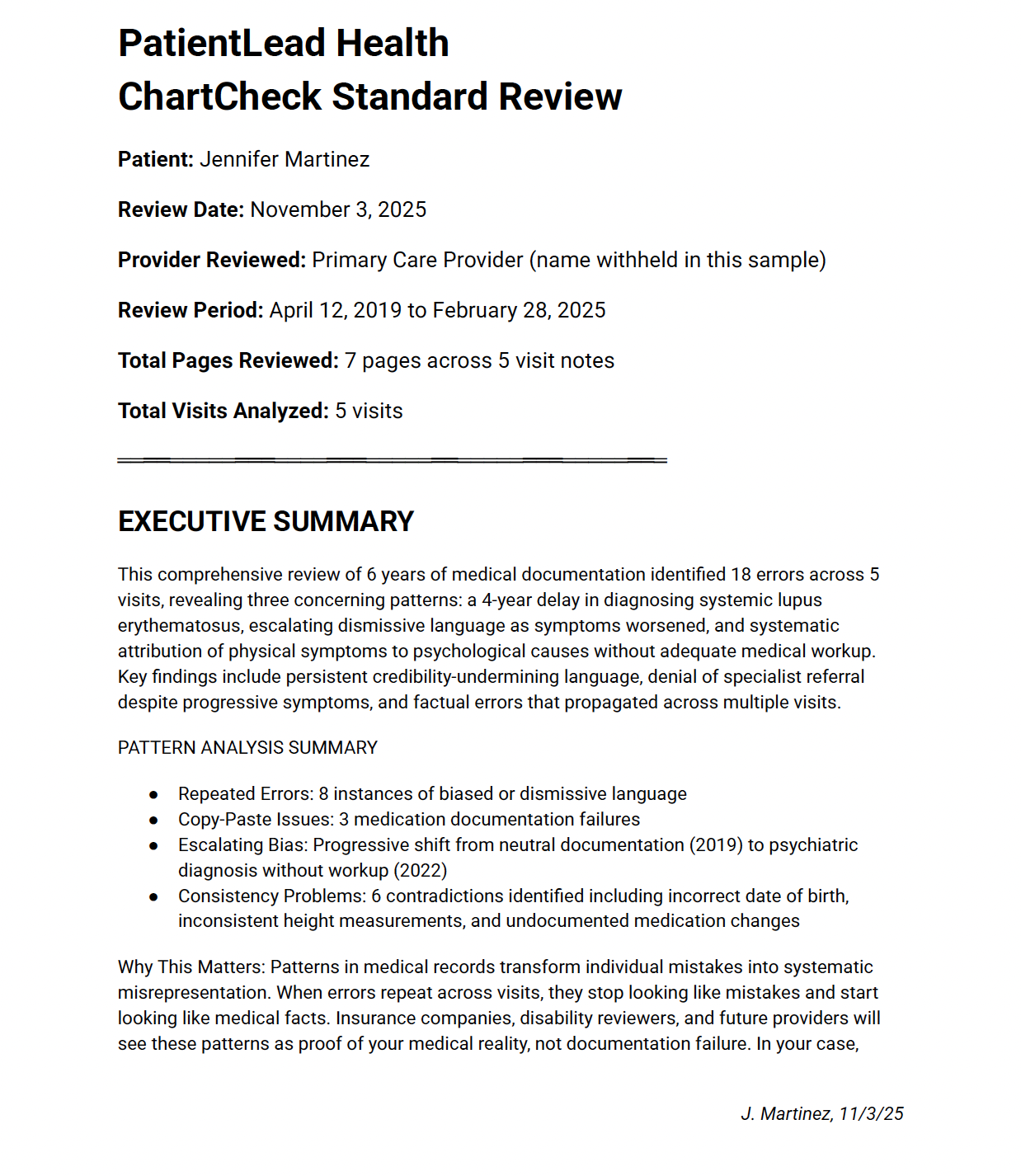
Case Study: Diagnostic Delay
This patient reported progressive symptoms for years but was diagnosed with “somatic symptom disorder” instead of being referred to a specialist. When finally diagnosed with lupus, she had already developed kidney involvement.
What This Review Uncovers:
- Biased language that undermined patient credibility
- Specialist referral denied despite appropriate request
- Factual errors (wrong date of birth, undocumented medications)
- Psychiatric diagnosis made without proper evaluation
Patient details changed to protect privacy. This is a Standard Review ($247-347). All ChartCheck reviews include detailed error analysis, correction language, and strategic guidance.
Why Your Medical Record Matters
More Than You Might Think
Insurance Denials
A single outdated diagnosis or inaccurate symptom description can tank your coverage claim. Insurance companies use your records to justify denials.
Provider Dismissal
New doctors read your chart before meeting you. Biased language like “patient claims” or “drug-seeking behavior” colors every interaction before you walk in the door.
Disability Claims
SSA reviewers never meet you. They decide your case based solely on your medical records. Missing documentation or minimized symptoms can mean automatic denial.
Treatment Delays
Providers copy outdated information from old notes. Your current symptoms get buried under years of irrelevant history, delaying diagnosis and treatment.
Six Types of Errors Lurking in Your Chart
Factual Errors
Wrong dates, medications you never took, procedures you didn’t have, test results attributed to you that aren’t yours.
Biased Language
“Patient claims,” “denies drug use,” “appears exaggerating.” This language suggests you’re unreliable before anyone meets you.
Copy-Paste Errors
Providers copy from previous notes without updating. Symptoms you had five years ago are listed as current problems.
Missing Information
Test results never entered, specialist recommendations ignored, your reported symptoms omitted from visit notes.
Misrepresented Decisions
“Patient declined treatment” when you asked for more time to consider. “Non-compliant” when medication caused severe side effects.
Outdated Diagnoses
Conditions you no longer have, medications you stopped years ago, “history of” labels that should have been removed.
What Happens When Records Go Unchecked
of patients never review their medical records despite having legal access under HIPAA
of patients who do review their records find errors serious enough to affect their care
lost to denied insurance claims, disability rejections, and delayed treatments due to documentation errors
“I spent two years fighting a disability denial. When I finally got my records reviewed, we found the neurologist had never documented my reported symptoms. Within three months of correcting the record, my claim was approved.”
MB, ChartCheck ClientProfessional Chart Review Services
All reviews include error identification, bias flagging, and ready-to-send correction language. Choose based on how much documentation you need reviewed.
Basic Review
- Complete error analysis
- Biased language identification
- Missing information noted
- Template correction language for each issue
- Delivery in 5-7 business days
Best for: Single problematic visit, new patient intake error, one specific appointment that went wrong
Get StartedStandard Review
- Everything in Basic Review
- Pattern analysis across multiple visits
- Identification of systemic documentation issues
- Copy-paste error tracking
- Outdated diagnosis review
Best for: Ongoing relationship with provider, building disability claim documentation, preparing for insurance appeal
Get StartedComprehensive Review
- Everything in Standard Review
- Cross-provider inconsistency analysis
- Prioritization guide (which errors to tackle first)
- Strategic timing recommendations
- Documentation gap identification
Best for: Complex cases with multiple specialists, major disability appeals, litigation preparation, comprehensive insurance fights
Get StartedWho Uses ChartCheck™
Disability Applicants
SSA reviewers base decisions on your medical records alone. Missing symptoms, minimized severity, or gaps in treatment documentation can mean automatic denial. Many successful appeals start with correcting the medical record.
Medical Gaslighting Survivors
When providers dismiss your symptoms or suggest problems are psychological, the chart often tells a different story. Documentation that says “patient claims severe pain” instead of “patient reports severe pain” undermines every future interaction.
Insurance Appeal Preparers
Claim denials often cite incomplete or inaccurate medical records. Before you appeal, check what the insurance company is actually reading. Corrected documentation strengthens your case significantly.
People Switching Providers
Your new doctor’s first impression comes from your chart. Outdated diagnoses, biased language, and copied errors follow you. Cleaning your record before switching gives you a fresh start.
Chronic Illness Patients
Years of appointments mean years of copy-paste errors. Symptoms from 2019 are listed as current. Side effects from discontinued medications remain in your problem list. Regular chart review prevents information decay.
Pre-Litigation Documentation
Medical malpractice and personal injury cases depend on accurate records. Identifying errors and getting corrections on file early creates a stronger foundation if you need to pursue legal action.
ChartCheck™ Results
“My disability claim was denied twice. ChartCheck found that my rheumatologist had never documented my reported fatigue levels, only the joint pain. We submitted corrections and medical records requests showing the pattern. Third appeal was approved.”
Result: Disability approval after chart correction
“I kept being labeled ‘drug-seeking’ for asking about pain management. The chart review showed this language appeared in copied notes from five different providers, all stemming from one ER visit where I requested specific medication. We corrected the original note and requested amendments from the others.”
Result: Biased language removed from active chart
“Insurance denied my treatment three times, citing ‘lack of medical necessity.’ ChartCheck revealed my specialist had documented treatment discussions but never formally recorded his recommendations. One letter got the recommendations added to my record. Insurance approved within two weeks.”
Result: Insurance approval after documentation correction
“I was listed as having diabetes for six years after a single high glucose reading during a hospital stay. The chart review caught it immediately. My PCP didn’t even realize it was in my active problem list. Removing it lowered my insurance premiums.”
Result: Incorrect diagnosis removed, insurance savings
About ChartCheck™
ChartCheck was created to address a widespread problem in healthcare: medical records full of errors, biased language, and missing information that actively harm people’s access to care, insurance coverage, and disability claims. Over years of helping patients navigate the healthcare system, we saw the same pattern emerge repeatedly, revealing the need for focused documentation review services.
ChartCheck does not diagnose conditions, recommend treatments, or offer any kind of medical advice. The service reads documentation with fresh eyes, identifies inaccuracies and problematic language, and helps patients exercise their legal right under HIPAA to request corrections.
This work draws on patient advocacy and healthcare navigation experience, including review of thousands of pages of medical records for people fighting disability denials, insurance appeals, and provider dismissal. It requires understanding both medical terminology and the bureaucratic systems that rely on these documents.
ChartCheck grew from a need identified repeatedly: patients experiencing provider dismissal, inadequate treatment, or denied benefits often suspect their medical records may be contributing to the problem, but they don’t have the time, energy, or expertise to identify every issue and craft appropriate corrections. They need someone who can read between the lines, spot patterns, and translate findings into actionable next steps.
Ready to find out what’s really in your chart?
Frequently Asked Questions
Is this medical advice?
No. ChartCheck is a documentation review service. It identifies errors, biased language, and missing information in your medical records. It does not diagnose conditions, recommend treatments, or provide medical opinions. ChartCheck can help you exercise your HIPAA rights to accurate documentation.
Is this legal advice?
No. If your situation involves active litigation or potential malpractice, you should consult an attorney. ChartCheck can help you identify documentation issues, but legal strategy requires legal counsel.
How do I get my medical records?
Under HIPAA, you have the right to your complete medical record. Contact your provider’s medical records department or use their patient portal. Most providers charge a small fee (usually $5-25). Request records in electronic format when possible to avoid copying charges.
What format should I send records in?
PDF is preferred. We also accept Word documents, images (JPG/PNG), or patient portal screenshots. Our intake system (IntakeQ) is HIPAA compliant and accepts most common file formats.
How long does review take?
Standard turnaround is 5-7 business days from when I receive your complete records. Rush service (2-3 business days) is available for an additional 50% fee. We confirm timeline when you submit your intake.
What do I receive?
You receive a detailed report in PDF format delivered via secure email. The report includes: identified errors with specific page/date references, biased or problematic language flagged, missing information noted, ready-to-send correction language for each issue, and prioritization guidance for complex reviews.
Will you contact my providers?
No. ChartCheck provides you with the analysis and tools to request corrections yourself. We don’t communicate with providers on your behalf. You submit correction requests directly using the language ChartCheck provides.
What if my provider refuses corrections?
Providers can refuse amendment requests, but they must allow you to submit a statement of disagreement that becomes part of your permanent record. The report includes guidance on this process. For complex situations, you may need legal assistance.
Is my information secure?
Yes. We use IntakeQ (HIPAA-compliant intake system), SRFax (HIPAA-compliant fax), ProtonMail (encrypted email), Stripe (PCI-compliant payment processing), and deliver all reports via secure encrypted PDF. Your information is never shared or sold.
Can you review records for disability claims?
Yes, but with important limits. ChartCheck can identify documentation gaps, missing symptom reports, and inconsistencies that weaken disability claims. It cannot tell you whether you qualify for disability or provide medical opinions about your conditions. We help ensure that your records accurately reflect your reported symptoms and limitations.
What if I have more than 50 pages?
Contact us before purchasing. For records over 50 pages, we provide custom quotes. Very large record sets (100+ pages) may require phased review or higher fees due to time requirements.
Do you offer refunds?
Refunds are available before we begin review. Once analysis starts, work is non-refundable as the service is delivered digitally and cannot be returned. If you’re unsure which service level you need, please contact us before purchasing.
Take Control of Your Medical Record Today
Your medical record follows you everywhere. Make sure it’s working for you instead of against you.
Questions? Email [email protected]